.png)
Precision Machined Components: 7 Custom Metal Parts Manufacturing Tips
In global B2B procurement—whether sourcing components for automotive systems, plumbing fixtures, medical equipment, 3C electronics, or heavy industrial machinery—even the smallest metal part directly dictates end-product assembly, sealing integrity, durability, and overall operational safety. A minor deviation in thread pitch or a fraction-of-a-millimeter drift in tolerance can stall an entire assembly line or lead to costly field failures.
Understanding how to source high-quality metal parts is essential for engineering and purchasing teams alike. But what exactly separates generic manufacturing from precision machining?
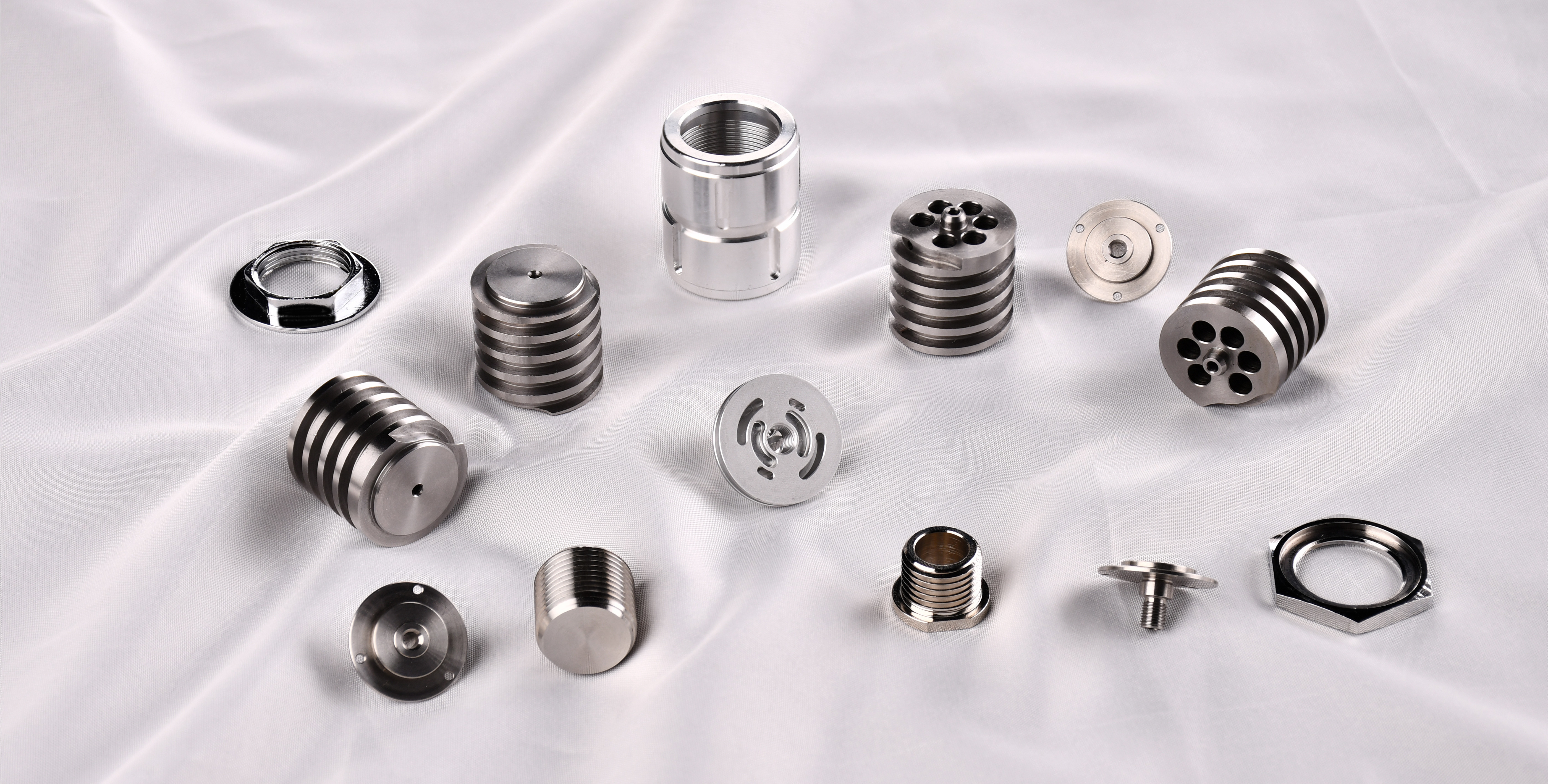
Defining Precision Machined Components & Custom Metal Parts
While custom metal parts manufacturing is a broad term encompassing any non-standard metal part fabricated to unique customer requirements, precision machined components represent the highest tier of this process.
These parts are produced via computer-numerical-controlled (CNC) machinery, turning, milling, and specialized grinding to strictly adhere to intricate 2D/3D technical drawings, strict tolerances, complex geometries, and superior surface finish specifications.
Common features of precision machined components include tight-tolerance internal/external threads, precise hole patterns, keyway grooves, complex contours, and critical mating surfaces that demand batch-to-batch consistency.
When evaluating potential manufacturing partners, buyers must look beyond initial unit prices. True cost-efficiency depends on complete technical drawing reviews, proper material selection, viable manufacturing processes, defined inspection protocols, capacity, and reliable lead times.
As an experienced precision manufacturing partner, JST CNC integrates raw forging, CNC turning, CNC milling, drilling, grinding, and secondary surface treatments—delivering tailored precision component solutions that match your exact engineering requirements.
7 Tips for Successful Custom Metal Parts Manufacturing
To help procurement managers and design engineers mitigate risks such as price discrepancies, unexpected engineering changes, component non-conformance, and mass-production instability, consider these seven crucial steps before issuing a Request for Quote (RFQ).
Tip 1: Prepare Complete Drawings and Specifications
Before requesting a quote, compile a complete engineering package containing both 2D drawings (with explicit dimensions and geometric tolerances) and 3D CAD models.
Clearly specify the required material grade, surface finish (e.g., anodizing, electroplating), order volume, and final product application. Crucial features—such as mating faces, thread standards, and sealing grooves—must be clearly flagged. The more comprehensive your initial technical data, the more accurately your manufacturing partner can evaluate process feasibility, tooling, production costs, and lead times.
Tip 2: Choose the Right Manufacturing Process
Selecting the optimal machining strategy depends on part geometry, material hardness, accuracy requirements, and production volume:
CNC Turning: Ideal for cylindrical, axial, or rotationally symmetrical components.
CNC Milling: Best suited for prismatic parts with flat surfaces, slots, complex pockets, and non-symmetrical profiles.
Turn-Mill Machining: Combines turning and milling operations in a single setup, drastically reducing re-clamping errors and cycle times for multi-featured parts.
Forging & Secondary Machining: Highly efficient for high-strength, high-volume structural components requiring optimized grain structure.
An experienced engineering team will analyze your drawings to recommend the most efficient process flow to balance performance and cost.
Tip 3: Select Materials Based on Function
Material selection should never be driven by unit material cost alone; it must account for mechanical strength, hardness, operational environment, corrosion resistance, electrical conductivity, and machinability.
Brass: Offers exceptional machinability and natural corrosion resistance, making it ideal for plumbing fittings, fluid valves, and hardware.
Stainless Steel: Chosen for high-durability, hygienic, or highly corrosive environments like medical devices, food equipment, and marine components.
Aluminum: Provides excellent strength-to-weight ratio and thermal conductivity, widely used in electronics and lightweight automotive assemblies.
Carbon & Alloy Steels: Excellent options for structural hardware and machinery components requiring high wear resistance and high load capacity.
Tip 4: Define Critical Tolerances Clearly
Over-specifying tight tolerances across non-critical dimensions unnecessarily inflates machining cycle times, inspection overhead, and scrap rates. Identify and highlight the truly critical dimensions—such as concentricity for rotating shafts, fit diameters, or sealing surface flatness—that directly impact function and assembly. Communicate openly with your manufacturer before quoting to confirm tolerance feasibility, measurement methodology, and acceptance criteria.
Tip 5: Verify Prototypes Before Mass Production
Never skip the prototyping phase. Producing initial samples allows engineering teams to validate dimensional accuracy, physical assembly, material properties, aesthetic finishes, and functional performance. Confirming design integrity on a short run minimizes the financial risk of encountering fitment issues during full-scale production. If design modifications are necessary, evaluate how these changes will impact CNC programming, custom fixtures, forging dies, unit costs, and timelines.
Tip 6: Confirm Inspection and Quality-Control Methods
Inquire directly about your supplier’s quality assurance infrastructure. Ask what measuring equipment is used and how they manage First Article Inspection (FAI), In-Process Quality Control (IPQC), and Final Quality Control (FQC). Advanced metrology tools, such as Coordinate Measuring Machines (CMM) and surface roughness profilers, ensure geometric tolerances and surface specs are met. For critical features, establish sampling frequencies, inspection plans, and required quality documentation (e.g., dimensional reports, material certs) in advance.
Tip 7: Evaluate Production Capacity and Communication
Select a supplier capable of seamlessly scaling production from initial prototyping to high-volume manufacturing while maintaining batch-to-batch consistency. Beyond machinery, evaluate the supplier’s engineering collaboration—do they offer Design for Manufacturability (DFM) feedback? Modern manufacturing integration, automated loading systems, and IoT production monitoring further enhance production transparency, efficiency, and delivery reliability.
Custom Metal Parts Manufacturing Capabilities
To support diverse industrial needs, JST CNC offers an integrated array of precision manufacturing capabilities:
Forging: Utilizes controlled pressure to shape metal, refining internal grain structure to deliver maximum component strength and structural integrity for high-load applications.
CNC Turning: Specialized in processing cylindrical components, shafts, precision threads, and rotational parts with high concentricity.
CNC Milling: Handles complex 3D profiles, pockets, precision holes, and planar features across multi-axis setups.
Turn-Mill Machining: Utilizing dual-spindle and synchronized multi-axis equipment, turn-mill machining completes multi-process operations in a single clamping step, eliminating re-positioning errors.
Drilling & Grinding: Precision drilling handles critical hole depths and locations, while centerless and surface grinding deliver ultra-tight tolerances and mirror-like surface finishes.
Surface Treatments: Complete post-processing options including anodizing, plating, passivation, and heat treatment to enhance wear resistance, corrosion protection, and aesthetic appearance.
Material Options for Custom Precision Components
Choosing the right raw material is fundamental to part performance. Below is an overview of core metal materials processed for custom component production:
Material | Key Characteristics | Common Applications |
Aluminum | Lightweight, corrosion-resistant, highly machinable | Electronics enclosures, automotive parts, lightweight structural frames |
Brass | Superior machinability, excellent corrosion resistance, attractive finish | Plumbing fittings, fluid control valves, architectural hardware, connectors |
Stainless Steel | Outstanding strength, heat resistance, and anti-corrosion properties | Medical components, food processing equipment, marine hardware |
Carbon Steel | Versatile strength, hardenable through heat treatment | Structural fasteners, automotive assemblies, industrial hardware |
Alloy Steel | High tensile strength, fatigue resistance, extreme durability | Heavy machinery components, gears, high-load mechanical shafts |
Copper | Exceptional thermal and electrical conductivity | Electrical terminals, heat exchangers, specialized plumbing elements |
Free-Cutting Steel | Optimized for rapid, clean machining and smooth surface finish | High-volume production shafts, precision fasteners, commercial fittings |
Chromoly Steel | High strength-to-weight ratio, excellent impact toughness | Bicycle frames, automotive performance parts, structural tubing |
Note: Material selection should evaluate part function, operating environment, secondary processes, regulatory compliance, and budget. Specific material grades, sizes, and tolerances are confirmed during RFQ evaluation.
Industry Applications of Precision Machined Components
Precision components serve as critical internal elements across several key global industries:
Plumbing & Fluid Control:
Faucet internal cores, valve bodies, liquid connectors, and precision-threaded joints requiring absolute sealing, corrosion resistance, and fluid safety.
Automotive & Transportation:
Engine fittings, transmission components, fluid line connectors, and custom brackets demanding high fatigue strength and strict batch-to-batch consistency.
Bicycle & Motorcycle:
High-strength wheel axles, suspension pivots, brake assembly components, and lightweight structural hardware where weight reduction and structural safety are paramount.
Hardware & Construction:
Heavy-duty fasteners, architectural fittings, structural connectors, and custom brackets engineered for high load capacity and durable surface finishes.
3C Products & Electronics:
Compact structural frames, thermal heatsinks, internal mounting bosses, and precision connector housings requiring ultra-fine tolerances and pristine visual appearance.
Medical Equipment:
Non-invasive device housings, structural equipment pivots, bracketry, and fluid delivery hardware requiring strict material traceability, burr-free finishing, and precise geometry.
From RFQ to Delivery: Our Custom Manufacturing Process
To provide transparent, seamless project execution for international buyers, our custom manufacturing workflow follows a structured seven-step path:
Request a Quote (RFQ):
You submit technical drawings, material preferences, critical tolerances, quantity requirements, and target timelines for initial engineering review.
Design & Engineering Review:
Our engineers conduct a thorough technical analysis, offering Design for Manufacturability (DFM) suggestions to optimize geometry, reduce production costs, and prevent defects.
Prototyping & Sampling:
First-article samples are produced and subjected to rigorous dimensional and functional testing, then shipped to you for final approval.
Mass Production:
Upon sample sign-off, production transitions to mass manufacturing using automated CNC equipment, multi-axis machining centers, and real-time monitoring.
Quality Inspection:
Dedicated quality control teams execute multi-stage inspections (FAI, IPQC, FQC) using calibrated metrology equipment against agreed drawing standards.
Packaging & Logistics:
Custom protective packaging prevents damage during transit, coordinated with reliable air, sea, or express freight logistics.
Delivery & Ongoing Support:
Timely shipment delivery backed by dedicated post-delivery engineering support and streamlined repeat-order management.
How We Control Precision and Quality
Delivering stable quality across thousands of complex metal components requires an integrated quality assurance framework:
Multi-Stage Inspection:
Quality control spans incoming raw material verification, First Article Inspection (FAI), in-process dimensional monitoring, and final pre-shipment audits.
Advanced Metrology Equipment:
Utilizing Coordinate Measuring Machines (CMM), optical measuring systems, and surface profilers to verify intricate geometric tolerances, thread profiles, concentricity, and surface roughness (Ra).
Automation & Digital Integration:
Automated loading systems, dual-spindle multi-axis centers, and IoT equipment monitoring eliminate manual loading variability, reduce cycle times, and maintain operational transparency.
Industry Standards & Compliance:
Quality management systems align with ISO 9001 standards, ensuring full material traceability, process documentation, and consistent quality metrics across every production lot.
Why Choose JST CNC for Custom Metal Parts Manufacturing?
Partnering with JST CNC provides your supply chain with distinct engineering and operational advantages:
Over 50 Years of Machining Experience:
Founded in 2020 as the dedicated precision machining brand of Chang Yi Shin (established in 1968), JST CNC builds upon decades of OEM manufacturing expertise.
End-to-End Manufacturing Support:
Full-service capabilities from initial DFM drawing review and prototyping to full mass production, surface treatment, and global delivery.
Integrated Precision Capabilities:
In-house integration of metal forging, CNC turning, CNC milling, turn-mill composite machining, precision drilling, and surface finishing.
Automation & Smart Manufacturing:
Advanced automated loading, dual-spindle processing, and digital monitoring deliver high efficiency, consistent quality, and transparent timelines.
Collaborative Engineering Approach:
We work as an extension of your design team, helping refine component designs to lower unit costs without compromising functional integrity.
Cross-Industry Expertise:
Proven track record supplying precision-engineered components across plumbing, automotive, motorcycle, bicycle, hardware, 3C, and medical equipment sectors.
Frequently Asked Questions (FAQ)
Q1. What are precision machined components?
Precision machined components are custom metal or alloy parts manufactured via high-precision CNC equipment to meet exacting technical drawings, tight dimensional tolerances, specific surface roughness criteria, and strict functional requirements.
Q2. What information is needed for a custom metal parts quote?
To receive an accurate and timely quote, provide 2D drawings (PDF/DWG), 3D CAD files (STEP/IGES), material specifications, surface finish requirements, order quantities, critical tolerance callouts, and expected delivery schedules.
Q3. What materials can JST CNC machine?
We routinely process a wide range of metals including brass, aluminum alloys, stainless steel grades, carbon steel, alloy steel, copper, free-cutting steel, and chromoly steel. Specific material grades are verified during project intake.
Q4. What tolerances can you achieve?
Achievable tolerances depend on material selection, overall part dimensions, structural geometry, tooling, and specific process flows. Critical dimensions requiring tight tolerances are evaluated on a per-drawing basis during engineering review.
Q5. Can you handle both low-volume prototyping and mass-production orders?
Yes. We support projects through initial engineering DFM review, short-run prototyping, and seamless scaling into full mass production.
Start Your Custom Metal Parts Project with JST CNC
Whether you are developing a new fluid control valve, lightweight automotive component, or intricate hardware fitting, having an experienced manufacturing partner ensures your design moves smoothly from draft to market.
By preparing complete engineering drawings, understanding material behavior, and partnering with an integrated precision manufacturer, you eliminate sourcing risks and secure consistent quality for every batch.